 Quran
Learning how to read quran if you don’t know arabic is absolutely possible. You do not need to speak conversational Arabic before you begin. Instead, you can start by learning the Arabic letters, vowel marks, and basic pronunciation, then gradually practice reading Quranic words and short Surahs.
With consistent practice, listening to clear recitations, and guidance in Tajweed, beginners can develop accurate Quran reading skills while learning the meaning through reliable translations and Tafsir.
In this guide, we’ll walk you through simple steps to start reading the Quran confidently, even if Arabic is completely new to you.
1. Learn the Arabic Alphabet
Begin with the 28 Arabic letters and learn the correct sound of each one. Pay attention to letters that may look or sound similar, such as ب, ت, and ث.
Practice recognizing the letters without depending on their English transliteration. Once you can identify them quickly, reading Quranic words becomes much easier.
2. Learn Harakat and Basic Arabic Sounds
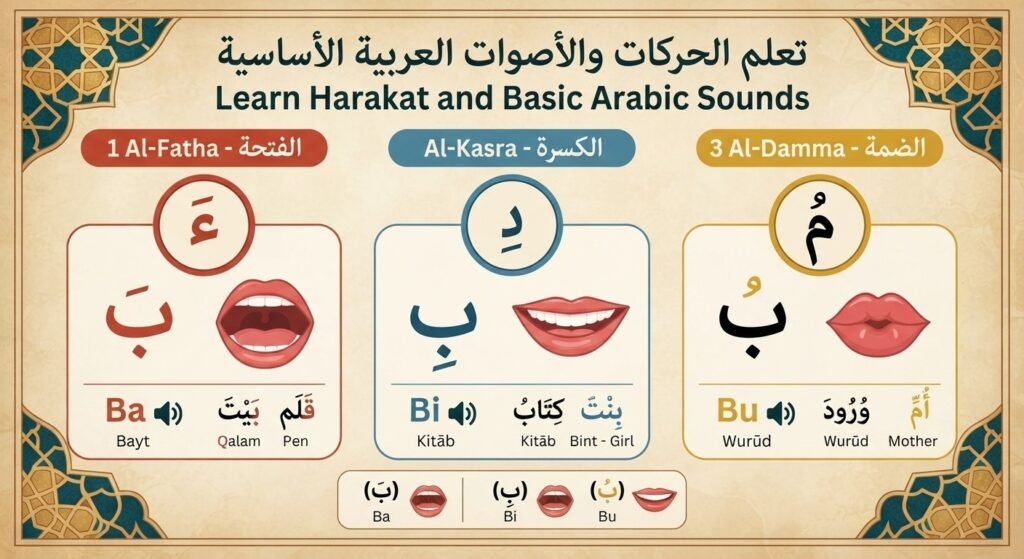
After learning the letters, practice the main Harakat, including Fatha, Kasra, Damma, Sukoon, and Shadda.
Start by combining a letter with a vowel mark and reading the resulting sound aloud. For example, practice simple combinations repeatedly until you can recognize them without stopping to think about every letter.
This stage helps you move from memorizing letters to actually decoding Quranic text.
3. Practice Reading Simple Arabic Syllables and Words
Once you understand individual letters and Harakat, begin joining them together to read short syllables and simple Quranic words.
A structured resource such as the Noorani Qaida can be useful at this stage because it introduces Arabic reading patterns gradually before you move to longer Quranic passages.
Do not worry about reading quickly. Your priority should be recognizing each letter, applying its vowel mark, and producing the sound correctly.
4. Start With Short and Familiar Surahs
When you are comfortable with basic words, begin reading short Surahs that you may already recognize from prayer, such as Surah Al-Fatihah, Surah Al-Ikhlas, or Surah Al-Falaq.
Reading familiar passages can make practice feel easier because you may already know their sequence or have heard them recited many times.
Read slowly at first, following the Arabic text word by word. Accuracy is more important than speed.
Read Also: How To Read The Quran In English In Australia?
5. Listen and Read Along With the Recitation
Listening to a clear Quran recitation while following the Mushaf can help you connect written Arabic with its correct pronunciation.
Try this simple method:
- Listen to one short verse.
- Follow the words in the Quran.
- Pause the recitation.
- Read the same verse aloud.
- Repeat it several times.
This listening-and-reading approach can help beginners become more familiar with pronunciation, rhythm, and natural pauses.

6. Learn Basic Tajweed Gradually
Once you can read basic Quranic words, start learning Tajweed step by step. Tajweed teaches principles that help you pronounce Quranic letters and sounds correctly during recitation.
You do not need to learn every Tajweed rule at once. Begin with the rules that directly affect your reading and pronunciation, then build your knowledge as you progress.
Regular correction from a qualified Quran teacher can be especially helpful because some pronunciation mistakes are difficult to notice on your own.
7. Practice With Feedback From a Qualified Teacher
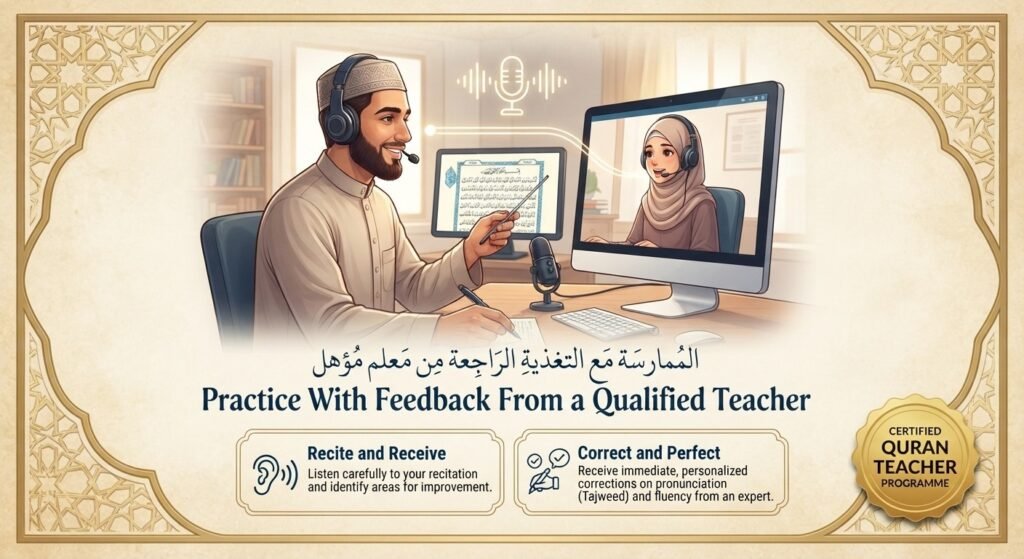
Self-study can help you learn letters and basic reading patterns, but a qualified Quran teacher can listen to your recitation and identify mistakes that you may not recognize.
An online Quran lesson can provide personalized practice, pronunciation correction, and gradual Tajweed instruction based on your current level.
The goal is not simply to finish a page quickly. It is to develop accurate, confident Quran reading skills through consistent practice and appropriate guidance.
Read Also: How To Read The Quran In Arabic Easily?
Should You Use Transliteration to Read the Quran?
Yes, transliteration can be useful when you are learning how to read the Quran if you don’t know Arabic, especially during the early stages. It writes Arabic words using Latin letters, which can help beginners recognize how a word may sound.
However, transliteration should be treated as a temporary learning aid, not a replacement for learning to read the Arabic Quranic text.
How Can You Understand the Quran If You Don’t Know Arabic?
Learning how to read quran if you don’t know Arabic and understanding its meaning are related but different skills. You can begin reading the Arabic text while using reliable English resources to understand what the verses mean.
Read a Reliable Quran Translation
If you do not understand Arabic, use a trustworthy English Quran translation alongside the Arabic text. Reading the translation after each verse or short passage can help you understand the general meaning while continuing to practice your Arabic reading.
Try not to replace the Arabic text entirely with the translation. Use both together so you can develop reading skills while learning the meaning.
Learn Common Quranic Vocabulary
You do not need to learn thousands of Arabic words before you can understand basic Quranic vocabulary. Start with words and expressions that appear frequently in the Quran.
As you encounter the same words repeatedly, their meanings can become easier to recognize. Keep a small vocabulary list and review a few words regularly rather than trying to memorize too much at once.
Use Tafsir for Deeper Understanding
A translation provides the meaning of the Quran in another language, while Tafsir can provide additional explanation and context for verses.
When a verse seems difficult to understand, consulting a reliable Tafsir can help you explore its context and meaning more carefully. This is particularly useful when a direct translation does not fully explain the message of a passage.
Begin Learning Quranic Arabic
If you want to understand the Quran directly in Arabic, you can gradually study Quranic Arabic alongside your reading practice.
Focus first on commonly used vocabulary, basic grammar, and recurring expressions. You do not need to become fluent in conversational Arabic before starting.
A practical approach is to combine Quran reading, listening, vocabulary, translation, and gradual Arabic study. This allows you to improve your recitation while building a deeper understanding of the Quran over time.
Read Also: Common Mistakes When Reading the Quran
How Long Does It Take to Learn to Read the Quran Without Arabic?
There is no single timeframe for learning how to read quran if you don’t know Arabic. The time depends on your starting level, how often you practice, your pronunciation, and whether you study with a qualified Quran teacher.
A complete beginner may start recognizing Arabic letters and basic vowel marks within the first few weeks of consistent practice. With continued learning, you can gradually move from individual letters to syllables, words, and short Surahs.
Your progress may look like this:
- First stage: Learn Arabic letters and their basic sounds.
- Second stage: Practice Harakat, connected letters, and simple words.
- Third stage: Start reading short Quranic verses and familiar Surahs.
- Fourth stage: Improve fluency, pronunciation, and basic Tajweed.
- Ongoing: Continue developing accuracy, confidence, and Quranic understanding.
The most important factor is consistency rather than speed. Practicing for a short period every day can be more effective than studying for a long session only once a week.
See Us in Action!
Curious about what our online classrooms look like? Watch the short clips below to see how our interactive, one-on-one sessions bring learning to life with real-time feedback and engaging teaching methods.
Start Your Quranic Journey in Australia
Join our leading online academy and learn with expert tutors through a structured, personalized curriculum.
Book Your Free TrialCan You Learn to Read the Quran by Yourself?
Yes, you can begin learning to read the Quran by yourself, especially if you are starting with the Arabic alphabet, Harakat, and basic reading patterns. Books, Quran learning apps, audio recitations, and online resources can help you practice independently.
However, self-study can become challenging when you reach Quranic pronunciation and Tajweed. Some Arabic sounds are difficult to recognize or correct without someone listening to your recitation.
Common Mistakes Beginners Make When Learning to Read Quran
Learning how to read quran if you don’t know Arabic becomes much easier when you avoid common beginner mistakes. You do not need to learn everything at once; you need a clear progression and consistent practice.
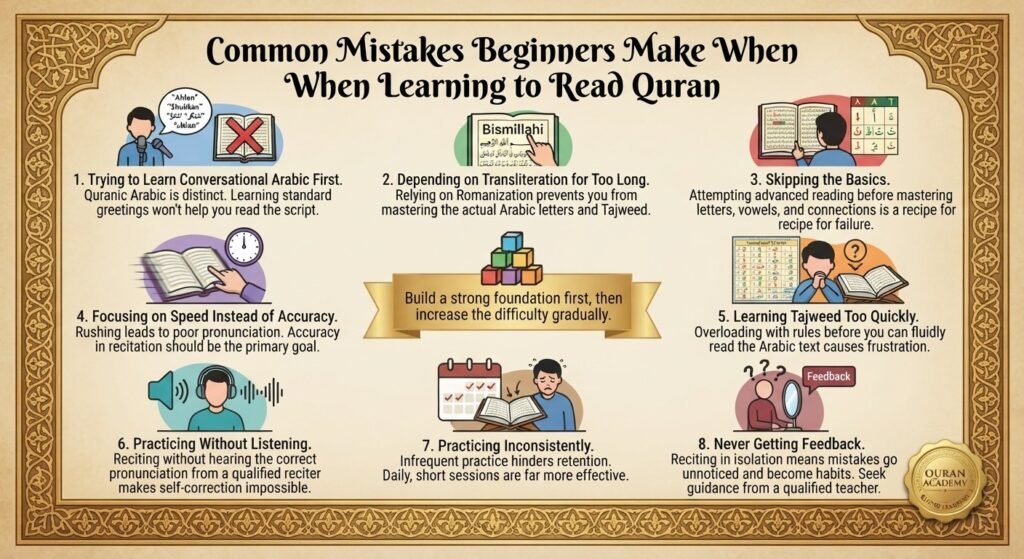
Trying to Learn Conversational Arabic First
You do not need to become fluent in everyday Arabic before learning to read the Quran. Start with the Arabic alphabet, Harakat, pronunciation, and Quranic reading patterns instead.
1. Depending on Transliteration for Too Long
Transliteration can help at the beginning, but relying on it permanently can prevent you from becoming comfortable with the Arabic script. Use it as a temporary support while gradually moving toward reading directly from the Mushaf.
2. Skipping the Basics
Some beginners try to read complete Quranic verses before they can confidently recognize Arabic letters and vowel marks. This can lead to repeated pronunciation mistakes.
Build a strong foundation first, then increase the difficulty gradually.
3. Focusing on Speed Instead of Accuracy
Reading quickly is not the main goal when you are learning. Take your time to recognize each letter, apply the correct Harakat, and pronounce the word carefully.
Fluency will improve naturally as your accuracy and familiarity increase.
4. Learning Tajweed Too Quickly
Tajweed is important, but trying to memorize many advanced rules at the beginning can make learning overwhelming.
Start with the pronunciation principles that directly affect your reading, then gradually expand your knowledge.
5. Practicing Without Listening
Reading only from the written page may make it difficult to recognize whether you are pronouncing unfamiliar Arabic sounds correctly. Regularly listen to clear Quran recitations and repeat what you hear.
6. Practicing Inconsistently
Studying for hours occasionally is not always as effective as short, regular practice. Even a few focused minutes each day can help you maintain what you have learned and gradually build confidence.
7. Never Getting Feedback
If you always practice alone, pronunciation mistakes may go unnoticed. Reading regularly to a qualified Quran teacher can help you identify errors early and develop more accurate recitation habits.
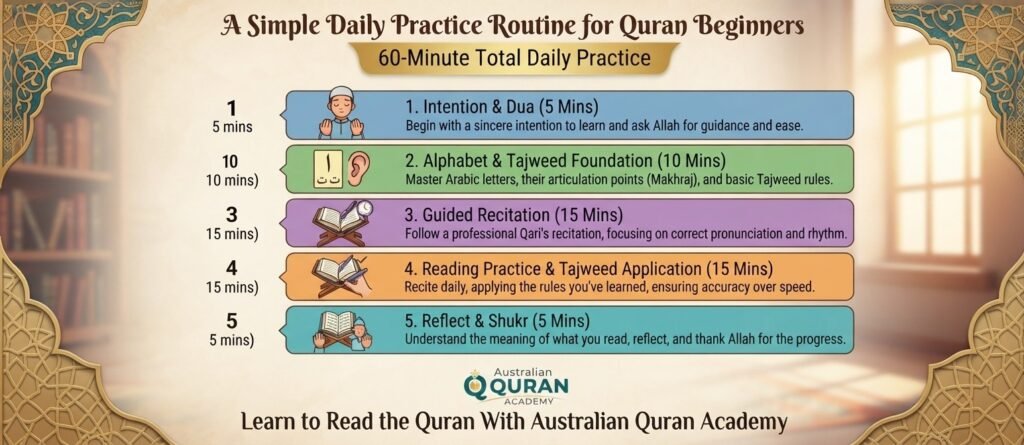
A Simple Daily Practice Routine for Quran Beginners
Consistency is one of the best ways to improve your Quran reading. You do not need to spend hours studying every day.
A short, focused routine can help you gradually improve your Arabic reading, pronunciation, and confidence.
Read Also: Can Adults Learn to Read Quran in Australia?
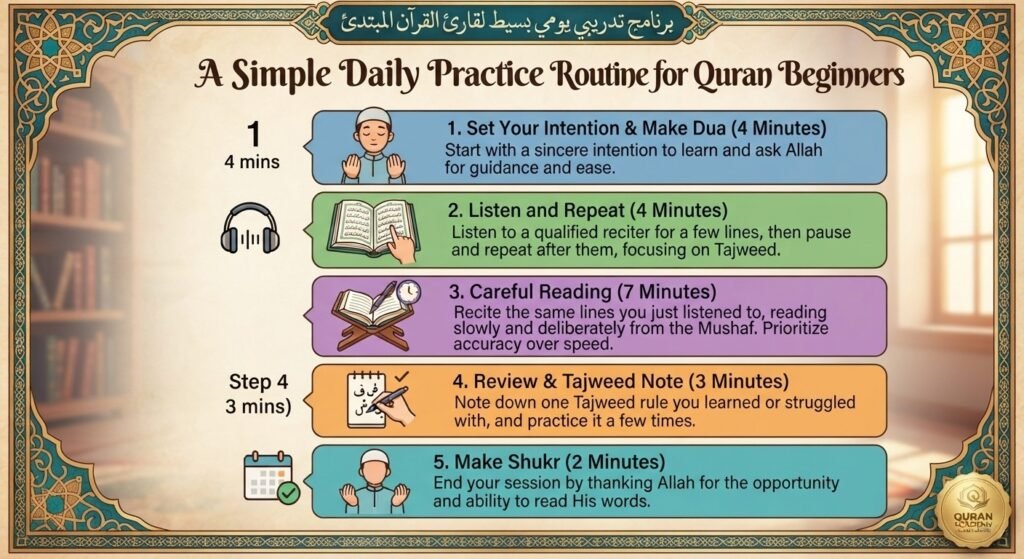
A 20-Minute Quran Reading Routine
- 5 minutes: Review Arabic letters and Harakat
Start by reviewing a few Arabic letters, vowel marks, or reading combinations that you are still learning. Repeat difficult sounds until they become more familiar. - 5 minutes: Read simple Quranic words
Practice connecting letters and reading short words. Focus on accuracy rather than speed, and pay attention to each Harakah and pronunciation mark. - 5 minutes: Listen and repeat
Choose a short verse and listen to a clear Quran recitation. Follow the Arabic text with your eyes, then pause and repeat the verse aloud. - 5 minutes: Read from the Mushaf
Finish by reading a short passage directly from the Quran. Start with a few lines or a short Surah and gradually increase the amount as your reading becomes easier.
Add Teacher Feedback Regularly
If you are taking online Quran lessons, use your lesson time to read aloud and receive corrections. Between lessons, repeat the areas your teacher identified as needing improvement.
The routine does not have to remain exactly 20 minutes. As your skills develop, you can increase the practice time or focus more on Tajweed, fluency, and Quranic vocabulary.
Learn to Read the Quran With Australian Quran Academy
If you are searching for how to read Quran if you don’t know Arabic, you do not have to learn alone.
Australian Quran Academy provides online Quran learning support for beginners who want to build their Arabic reading and Quran recitation skills step by step.
You can start from your current level, even if you cannot recognize the Arabic alphabet yet. Lessons can focus on the foundations you need first, including Arabic letters, Harakat, Quranic words, pronunciation, and gradual Tajweed practice.
Instead of rushing through difficult passages, a structured learning approach allows you to develop your reading skills at a comfortable pace.
Learn Quran Reading With Qualified Teachers
Reading the Quran correctly involves more than recognizing Arabic letters. A teacher can listen to your recitation, identify pronunciation issues, and guide you through the areas that need additional practice.
With personalized instruction, you can receive feedback based on your individual reading level rather than following a one-size-fits-all approach.
Inside Our Virtual Classrooms
We believe in full transparency and proven quality. Take a look at these actual snippets from our live classes to experience our modern learning platform, patient instructors, and interactive student participation.
Start Your Quranic Journey in Australia
Join our leading online academy and learn with expert tutors through a structured, personalized curriculum.
Book Your Free TrialLearn Online From Australia
For learners in Australia, online Quran classes offer a convenient way to study without traveling to a physical learning centre. You can learn from home and maintain a consistent Quran learning routine around your existing schedule.
Whether you are an adult beginning your Quran journey or looking for structured Quran lessons for a child, choosing a supportive learning environment can make the process more comfortable and engaging.
Ready to start learning? Join Australian Quran Academy and begin your Quran reading journey with lessons designed to help you progress step by step.
Our Quran Courses
- Quran Online Academy
- Quran Recitation Classes
- Quran Reading Classes
- Online Quran Classes for Kids
- Quran Classes for Adults
- Quran Classes for Female/Sisters
- Learn Quran Course for Beginners
- Quran Memorization (Hifz) Course
- Hifz Classes for Adults
- Quran Memorization and Hifz Course for Kids
- Quran Hifz Course for Ladies
- Quran Ijazah Program
- Quran Qirat Learning Course
- Quran Tafsir Course
- Noorani Qaida Course
- Noorani Qaida Course for Kids
- Weekend Quran Classes
- Intensive Quran Course
- Al-Azhar Quran Course
- Online Tajweed Classes
- Tajweed Course for Kids
- Tajweed Course for Adults
- Tajweed Course for Ladies
Conclusion
Learning how to read Quran if you don’t know Arabic is possible when you take the process one step at a time. You can begin with the Arabic alphabet, Harakat, connected letters, and basic pronunciation before progressing to Quranic words, short Surahs, and Tajweed.
You do not need to become fluent in Arabic before starting. With regular practice, careful listening, and reliable guidance, you can gradually improve your accuracy and confidence while using translations and Tafsir to explore the meaning of the Quran.
If you want structured support, Australian Quran Academy can help you build your Quran reading skills through online lessons designed around your learning level. Start your journey today and take your first step toward reading the Quran with greater confidence.
FAQs
How can I read the Quran if I don’t know Arabic?
Start with the Arabic alphabet and basic Harakat, then practice connecting letters into words. After that, move to short Surahs, listen to Quran recitations, and gradually learn Tajweed. A qualified Quran teacher can also help correct your pronunciation.
Do I need to learn Arabic before learning the Quran?
No. You can begin learning to read the Quran without first becoming fluent in Arabic. However, learning Quranic Arabic alongside your reading practice can help you understand the meanings of the verses more deeply.
Can I use transliteration to read the Quran?
Yes, transliteration can be useful as a temporary learning aid. However, it is better to gradually learn the Arabic script because English letters cannot fully represent all Arabic sounds and Quranic pronunciation features.
Can I learn Quran reading online?
Yes. Online Quran lessons can provide structured instruction in Arabic reading, Quran recitation, and Tajweed. Learning online can also make it easier to maintain a regular schedule from home.
Do I need a Quran teacher?
You can learn some basic skills independently, but a qualified Quran teacher can be particularly helpful for pronunciation and Tajweed. Regular feedback can help you identify and correct mistakes that may be difficult to notice on your own.





Leave a Reply