 Quran
Quran

| Key Takeaway |
| Free online Quran classes in Australia remove both financial and geographical barriers — families in regional towns and major cities access the same certified teachers from home. |
| A qualified teacher with an Ijazah or Al-Azhar certification is non-negotiable; enthusiasm and English fluency alone do not guarantee correct Tajweed instruction. |
| Children, adults, sisters, and new Muslims each need a differently sequenced programme — a class designed for one group does not serve another well. |
| Consistency matters more than session length: 15–20 focused minutes daily produces faster progress than a two-hour session once a week. |
| Free trial classes should require no payment details and no commitment — if a platform asks for credit card information before a trial, treat that as a warning sign. |
| Australian Quran Academy connects learners across Australia with certified instructors who provide real-time correction, personalised learning plans, and flexible scheduling built around Australian time zones. |
Every Muslim parent in Australia faces the same quiet challenge: your child deserves a qualified Quran teacher, but local options are limited, schedules are brutal, and cost adds up fast.
The good news is that free online Quran classes for kids in Australia have become genuinely accessible — from structured trial programs run by certified academies to free YouTube-based resources covering Noorani Qaida, Tajweed, and short Surah memorisation.
This guide breaks down exactly what is available, what to realistically expect from each option, and how to choose the right path for your child’s age and level.
What Free Online Quran Classes for Kids in Australia Actually Look Like?
The phrase “free online Quran classes” covers two distinct things, and confusing them leads to disappointment.
The first category is permanently free content — YouTube playlists, apps, and downloadable PDFs covering Noorani Qaida fundamentals and short Surah memorisation. These are genuinely free with no catch, but they carry a significant limitation: no teacher is watching or correcting your child.
The second category is free trial classes offered by structured academies. These are live, one-on-one sessions with a certified instructor, provided at no cost for the first week or first few lessons. After the trial, a monthly subscription applies. For families who need long-term guided instruction — which most children do — this is the realistic starting point.
Understanding this distinction upfront helps parents set accurate expectations and choose the right entry point.
The Critical Limitation of YouTube-Only Quran Learning
Free YouTube content has genuine value as a supplement, but it carries one foundational problem: there is no teacher watching your child’s mouth.
Tajweed errors in young learners solidify quickly into habits. Makhaarij mistakes in letters like ع (Ayn), غ (Ghayn), ح (Ha), and خ (Kha) are nearly impossible to self-correct without direct, real-time correction from a qualified teacher. The tradition of talaqqi — receiving Quran directly from a teacher — is not incidental to Quranic transmission; it is foundational to it.
The Prophet ﷺ himself received the Quran through direct oral transmission, and this chain of mouth-to-ear learning has never been replaced by any technology.
For children who are just starting out, YouTube is useful for exposure and enthusiasm. It is not a substitute for live instruction.
If your child is learning Quran from home, consider Learn Quran for Beginners in Australia as a structured starting point with proper teacher supervision.
Read Also: Best Time To Learn Quran
What Do Free Online Quran Classes For Kids In Australia Actually Teach?
Whether through a free trial or a full programme, structured free online Quran classes for kids in Australia typically build through the following sequence:
1. Noorani Qaida
Noorani Qaida is the phonetic foundation that must come before any Quran reading begins. Children learn Arabic letter recognition, articulation points (Makhaarij), short and long vowels, tanwin, sukoon, and shaddah in structured stages.
A child who skips this stage and goes directly to Quran reading will guess at pronunciation rather than applying understood rules — the difference between a child who reads the Quran and one who recites it correctly.
Australian Quran Academy’s Noorani Qaida for Kids course is built around exactly this structured progression, starting from zero Arabic background.
2. Tajweed Rules
Effective Tajweed instruction does not teach rules in the abstract and then apply them later. Children learn rules like Ikhfa, Idgham, Iqlab, and Qalqalah directly within actual Quranic verses from the first lessons.
This applied approach produces stronger long-term retention than theoretical study separated from recitation practice.
| Tajweed Rule | Letters Involved | What Happens in Recitation |
| Ikhfa | 15 letters (ت ث ج ذ…) | Nasal sound before these letters |
| Idgham with Ghunnah | ي ن م و | Merging noon sakinah with nasalisation |
| Qalqalah | ق ط ب ج د | Echo bounce when sukoon applies |
| Madd Tabii | ا و ي | Natural elongation of 2 counts |
3. Hifz (Memorisation)
For younger children, Hifz programmes begin with short Surahs from Juz Amma. Effective memorisation at this age uses three sessions per lesson: new memorisation, same-day review, and revision of previously memorised material.
This cycle prevents the most common Hifz problem — memorising new material while forgetting what came before.
Australian Quran Academy’s Hifz Programme for Kids follows this exact three-stage cycle with certified Huffaz instructors.
4. Islamic Studies Integration
Many programmes also incorporate basic daily duas, essential kalimas, and moral stories into short 30-minute lessons. This integration gives children a meaningful context for what they recite.
For families interested in a broader Islamic Studies curriculum, Islamic Studies Courses for Kids in Australia provide age-appropriate lessons that run alongside Quran classes and give children the foundational Islamic knowledge they need.
Read Also: Dua Before Starting Quran Class
Inside Our Virtual Classrooms
We believe in full transparency and proven quality. Take a look at these actual snippets from our live classes to experience our modern learning platform, patient instructors, and interactive student participation.
Start Your Quranic Journey in Australia
Join our leading online academy and learn with expert tutors through a structured, personalized curriculum.
Book Your Free TrialHow to Choose the Right Free Online Quran Classes for Kids in Australia?
Not all platforms are equal. Before enrolling your child, parents should evaluate four specific factors that determine whether a program will actually deliver results.
1. Teacher Qualifications and Child-Specialist Training
A teacher who is an excellent adult Quran reciter is not automatically a good children’s instructor.
Look specifically for teachers who hold an Ijazah (a chain of authorised transmission in Quranic recitation) and have documented experience working with children from non-Arabic speaking families.
The most common gap found in generic online platforms is this: their teachers are qualified reciters but are not trained in child pedagogy.
A child who loses interest in the first three sessions and refuses to continue has not been poorly taught — they have been taught as if they were an adult.
2. Curriculum Structure for the Child’s Exact Level
A seven-year-old complete beginner needs something very different from a twelve-year-old who already reads Arabic but wants to improve Tajweed. Quality platforms assess your child’s level before assigning a teacher and a program.
The standard children’s learning path runs: Arabic alphabet → Noorani Qaida → basic Tajweed rules → Quran reading with correction → short Surah memorisation → Hifz program.
Skipping any step — particularly the Noorani Qaida stage — creates pronunciation errors that are difficult to correct later.
If your child is also interested in building Arabic language skills alongside Quran, Arabic Lessons for Kindergarten in Australia provide age-appropriate language foundations that complement Quran reading progress.
3. Scheduling That Fits Australian School Hours
Australian families operate on a specific rhythm: school ends between 3 and 4 pm, afternoons are often committed to sport, and evenings involve homework and dinner. A platform that only offers lessons during Middle Eastern business hours is not a practical choice.
Look for platforms that offer sessions on weekday afternoons after 3:30 pm AEST, weekend mornings, and flexible make-up class policies when a child misses a session.
4. A Genuine Free Trial, Not a Locked Demo
A reputable platform offers your child a real, full-length lesson with the teacher they will continue with — not a five-minute demo or a pre-recorded walkthrough.
The trial lesson serves two purposes: it helps the teacher assess the child’s level, and it lets your child decide whether they feel comfortable with the teacher’s style.
Australian Quran Academy offers a free trial class for all new enrolments, giving families the opportunity to experience the teaching approach before making any commitment.
Read Also: Free Online Quran Classes In Australia
Book Your Child’s Free Trial Class with Australian Quran Academy
Australian Quran Academy provides structured, live, one-on-one free online Quran classes for kids in Australia — taught by certified instructors available across Australian time zones. Your child begins with a no-obligation free trial class before any commitment is required.
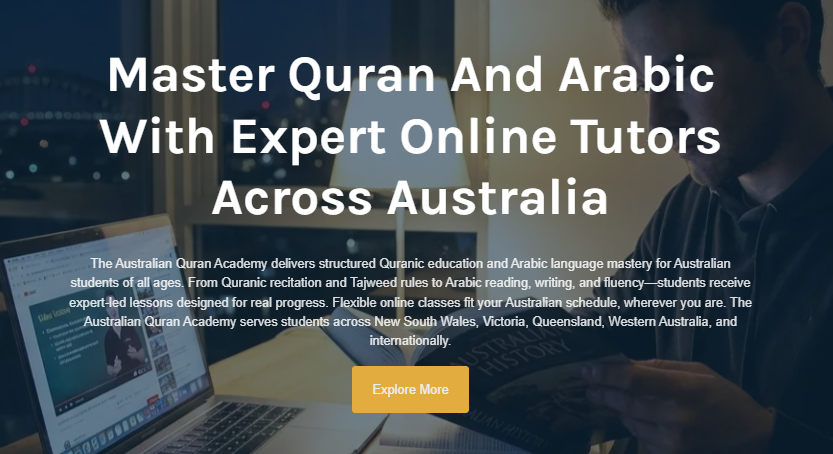
Programmes available for children include Noorani Qaida, Quran recitation, Tajweed, Hifz, and integrated Islamic Studies.
Flexible scheduling fits around Australian school hours, after-school afternoons, and weekends — wherever your family is located, from Sydney and Melbourne to regional Queensland and Western Australia.
Families interested in Arabic language alongside Quran can also explore Learning Arabic for Non-Arabic Speakers in Australia and Arabic Lessons for Kindergarten in Australia for younger children.
Our Quran Courses:
- Quran Recitation Classes
- Quran Reading Classes
- Online Quran Classes for Kids
- Quran Classes for Adults
- Quran Classes for Female/Sisters
- Learn Quran Course for Beginners
- Quran Memorization (Hifz) Course
- Hifz Classes for Adults
- Quran Memorization and Hifz Course for Kids
- Quran Hifz Course for Ladies
- Quran Ijazah Program
Start Your Quranic Journey in Australia
Join our leading online academy and learn with expert tutors through a structured, personalized curriculum.
Book Your Free TrialConclusion
Free online Quran classes for kids in Australia fall into two real categories: permanently free YouTube content that builds exposure but cannot replace live correction, and free trial classes from structured academies that provide genuine one-on-one instruction at no initial cost.
For children at the beginning of their Quran journey, the most important decision is not which free resource to use — it is whether a teacher will be watching, listening, and correcting in real time. Tajweed errors absorbed without correction in the early years become deeply ingrained habits that take years of dedicated work to undo.
The ideal approach combines both: use quality YouTube resources for daily exposure and enthusiasm, and book a structured programme with a certified teacher for the live correction and sequenced curriculum that children genuinely need.
Australian Quran Academy offers exactly this combination — certified instructors, Australian-friendly scheduling, child-specific pedagogy, and a free trial class so your child can experience it before you commit.
Frequently Asked Questions
Parents searching for free online Quran classes for kids in Australia commonly ask the following questions. The answers below are drawn from the current landscape of available programmes.
1. Are free online Quran classes for kids in Australia actually free?
It depends on the type. YouTube-based Quran learning resources are permanently free with no cost or commitment. Structured academy programmes typically offer a free trial period — usually one week or a few sessions — before a monthly subscription applies. Full long-term one-on-one programmes with certified teachers are not permanently free, but the free trial gives families a genuine, no-risk starting point.
2. What age can children start online Quran classes in Australia?
Most structured programmes accept children from age 4–5 for Noorani Qaida and basic Arabic letter recognition. Formal Quran reading typically begins around age 6–7, once a child has basic letter and sound recognition. Hifz programmes with memorisation targets are generally introduced at age 7 and above, though earlier exposure to short Surahs through listening is always beneficial.
3. Do children need to know Arabic before starting Quran classes?
No. Noorani Qaida is specifically designed for children with zero Arabic background. It teaches letter recognition, pronunciation, and articulation from scratch before any Quran reading begins. Most certified programmes available to Australian children assume no prior Arabic knowledge.
4. Can girls join online Quran classes with a female teacher?
Yes. Reputable programmes including Australian Quran Academy offer qualified female instructors (Qariyas) for girls and for families who prefer female teachers. This should be confirmed when booking a trial class.
5. How long does it take for a child to start reading the Quran?
With consistent daily practice and live instruction, most children can begin reading basic Quranic text within three to six months of starting Noorani Qaida. The timeline varies by age, session frequency, and daily practice at home. Children who practise for even five minutes daily between sessions progress significantly faster than those who only attend lessons without home reinforcement.
6. Is it enough to use YouTube for my child’s Quran education?
For supplementary exposure, yes — YouTube provides useful repetition of short Surahs, letter recognition, and memorisation aids. As a complete education, no. YouTube cannot correct your child’s pronunciation in real time, cannot track their progress, and cannot provide the structured Tajweed correction that certified live instruction delivers. It is a supplement, not a replacement.
Leave a Reply