 Quran
Quran
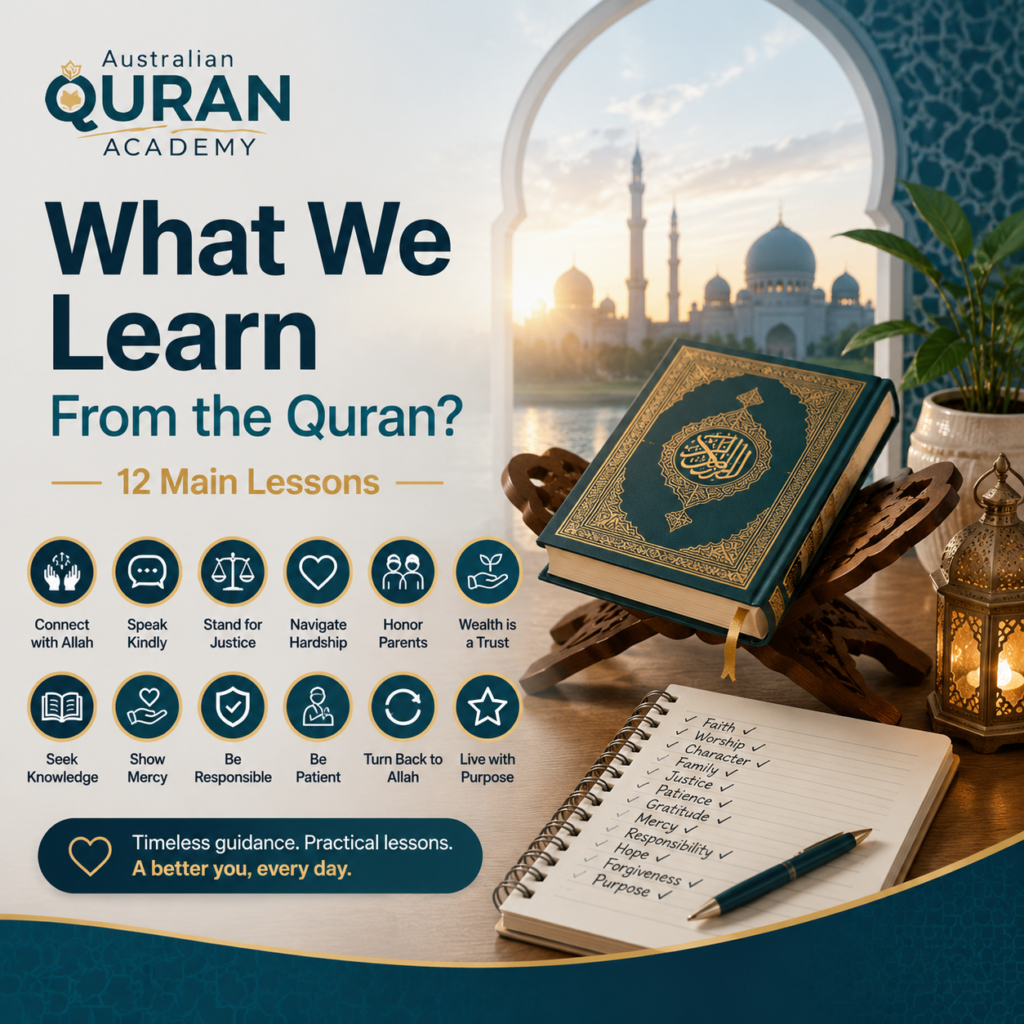
| Key Takeaways |
| The Quran builds a direct, unmediated relationship with God — no intermediary and no appointment needed before you can call on Him. |
| Good character is treated as worship itself: justice, kind speech, and honesty are acts of faith, not optional extras. |
| Sadness and struggle are human experiences the Quran acknowledges openly, answering them with hope rather than shame. |
| Kindness to parents sits directly beside the command to worship God, making family ties central to faith. |
| Wealth is framed as a trust from God, and charity is presented as growth and blessing rather than loss. |
| No amount of sin closes the door — as long as you are breathing, the chance to return and start over remains open. |
Have you ever finished reading a page of the Quran and felt it was speaking directly to a decision you were wrestling with that same week? That is not a coincidence.
Understanding what we learn from Quran is less about collecting facts and more about picking up a way of living — one that touches how you pray, how you treat your parents, how you handle money, and how you recover after a mistake.
The Quran is a complete guide for life. It teaches pure belief in one God, steady patience, honest speech, and mercy toward others, and it does so through verses meant to be applied, not just recited.
This article walks through the core lessons — grounded in specific verses — and shows how each one lands in ordinary daily life for Muslims in Australia and everywhere else. At Australian Quran Academy, we see these lessons come alive most when learners connect them to the verses in their own recitation.
1. We Learn A Direct Connection With God
The first thing the Quran dismantles is the idea of distance. God is not searching for reasons to punish you; He describes Himself as near and responsive.
“وَإِذَا سَأَلَكَ عِبَادِى عَنِّى فَإِنِّى قَرِيبٌ ۖ أُجِيبُ دَعْوَةَ ٱلدَّاعِ إِذَا دَعَانِ ۖ ..”
“And when My servants ask you, [O Muhammad], concerning Me — indeed I am near. I respond to the invocation of the supplicant when he calls upon Me.” (Surah Al-Baqarah 2:186)
This reframes worship entirely. Prayer stops being a box to tick and becomes a scheduled meeting with the One who knows you best — no intermediary, no appointment required.
For many learners, the letters feel like a wall standing between them and that connection. The practical fix is to start from the very basics of reading rather than jumping ahead, which is exactly the approach in structured programs like Learn Quran for Beginners in Australia. Reading with confidence, not frustration, is what turns recitation into connection.
Read also: Can You Learn the Quran During Periods? A Complete Guide for Muslim Students
2. We Learn To Speak Kindly To Everyone
A recurring lesson — one that surprises new students — is that good character is not a bonus on top of faith. It is faith in action. The Quran ties how you speak directly to the state of your heart.
“وَقُولُوا۟ لِلنَّاسِ حُسْنًۭا”
“And speak to people good [words].” (Surah Al-Baqarah 2:83)
Note the wording: “to people,” not “to Muslims.” All people. In an age of instant, anonymous replies, this is a demanding standard. A common self-check practitioners teach: if silence is kinder than what you’re about to say, silence is the more faithful choice.
3. We Learn To Stand For Justice, Even Against Ourselves
The Quran raises the bar higher than most of us are comfortable with — it asks for fairness even when it costs you.
“ يَـٰٓأَيُّهَا ٱلَّذِينَ ءَامَنُوا۟ كُونُوا۟ قَوَّٰمِينَ بِٱلْقِسْطِ شُهَدَآءَ لِلَّهِ وَلَوْ عَلَىٰٓ أَنفُسِكُمْ أَوِ ٱلْوَٰلِدَيْنِ وَٱلْأَقْرَبِينَ ۚ”
“O you who have believed, be persistently standing firm in justice, witnesses for Allah, even if it be against yourselves.” (Surah An-Nisa 4:135)
The test is simple to state and hard to pass: would you admit you were wrong in an argument even if it cost you money or reputation? That is the standard set here. Truth outweighs ego and tribal loyalty.
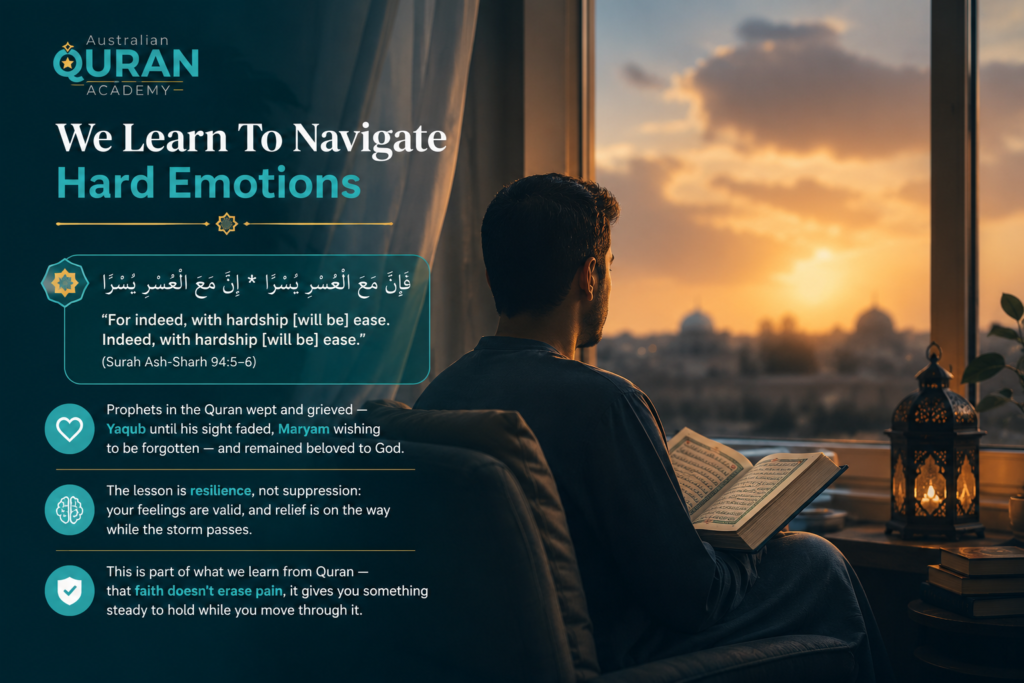
4. We Learn To Navigate Hard Emotions
There is a dangerous myth that people of strong faith should never feel sad. The Quran rejects it. It acknowledges pain openly, then attaches a promise.
“فَإِنَّ مَعَ ٱلْعُسْرِ يُسْرًا * إِنَّ مَعَ ٱلْعُسْرِ يُسْرًۭا ”
“For indeed, with hardship [will be] ease. Indeed, with hardship [will be] ease.” (Surah Ash-Sharh 94:5–6)
Prophets in the Quran wept and grieved — Yaqub until his sight faded, Maryam wishing to be forgotten — and remained beloved to God.
The lesson is resilience, not suppression: your feelings are valid, and relief is on the way while the storm passes. This is part of what we learn from Quran — that faith doesn’t erase pain, it gives you something steady to hold while you move through it.
Read also: How To Learn Quran Quickly In Australia? 9 Steps That Actually Work
5. We Learn To Honor Family Ties
Kindness to parents is placed immediately after the command to worship God alone — a statement about priority.
“۞ وَقَضَىٰ رَبُّكَ أَلَّا تَعْبُدُوٓا۟ إِلَّآ إِيَّاهُ وَبِٱلْوَٰلِدَيْنِ إِحْسَـٰنًا ۚ إِمَّا يَبْلُغَنَّ عِندَكَ ٱلْكِبَرَ أَحَدُهُمَآ أَوْ كِلَاهُمَا فَلَا تَقُل لَّهُمَآ أُفٍّۢ وَلَا تَنْهَرْهُمَا وَقُل لَّهُمَا قَوْلًۭا كَرِيمًۭا”
“And your Lord has decreed that you not worship except Him, and to parents, good treatment.” (Surah Al-Isra 17:23)
You can pray all night, but harshness toward a parent signals something broken. The verse even forbids saying “uff” — the smallest sound of irritation. It teaches emotional control and gratitude toward those who raised you.
6. We Learn That Wealth Is A Trust, Not A Possession
The Quran shifts how we think about money. It is not simply ours because we earned it; it is an amanah — a trust we are tested with. And the Quran’s math differs from the bank’s: giving does not shrink wealth, it multiplies it.
“The example of those who spend their wealth in the way of Allah is like a seed [of grain] which grows seven spikes; in each spike is a hundred grains.” (Surah Al-Baqarah 2:261)
Charity applies to time and energy too. Holding tightly to material things breeds anxiety; sharing brings inner peace.
See Us in Action!
Curious about what our online classrooms look like? Watch the short clips below to see how our interactive, one-on-one sessions bring learning to life with real-time feedback and engaging teaching methods.
Start Your Quranic Journey in Australia
Join our leading online academy and learn with expert tutors through a structured, personalized curriculum.
Book Your Free Trial7. We Learn To Embrace Human Diversity
For learners who feel like outsiders because of background or language, the Quran states plainly that human difference is intentional, not a flaw.
“يَـٰٓأَيُّهَا ٱلنَّاسُ إِنَّا خَلَقْنَـٰكُم مِّن ذَكَرٍۢ وَأُنثَىٰ وَجَعَلْنَـٰكُمْ شُعُوبًۭا وَقَبَآئِلَ لِتَعَارَفُوٓا۟ ۚ إِنَّ أَكْرَمَكُمْ عِندَ ٱللَّهِ أَتْقَىٰكُمْ ۚ”
“O mankind, indeed We have created you from male and female and made you peoples and tribes that you may know one another.” (Surah Al-Hujurat 49:13)
The purpose of difference is to know one another — not to fear or compete. Which is why studying alongside classmates from varied backgrounds, whether in Islamic Studies Courses for Adults in Australia or inQuran classes across Australia, reinforces the lesson rather than diluting it.
8. We Learn To Seek Knowledge And Reflection
The very first word revealed was “Read” (Iqra) — a command to seek knowledge, addressed to everyone regardless of gender.
“وَحْيُهُۥ ۖ وَقُل رَّبِّ زِدْنِى عِلْمًۭا”
“And say, ‘My Lord, increase me in knowledge.'” (Surah Taha 20:114)
Faith and reason are not opponents. You are meant to understand the “why” behind the words, which is why deeper study — tafsir, meaning, and context — matters as much as fluent recitation.
This is the approach Australian Quran Academy takes with its tafsir and reading courses: satisfying the intellect alongside the heart.
For younger learners, that curiosity is best built early through age-appropriate steps like Arabic Lessons for Kindergarten in Australia, while adults new to the language often begin with resources for learning Arabic as a non-Arabic speaker in Australia.

9. We Learn To Forgive And Let Go
Holding grudges is heavy — like carrying rocks everywhere you go. The Quran links forgiving others to being forgiven yourself.
“وَلْيَعْفُوا۟ وَلْيَصْفَحُوٓا۟ ۗ”
“And let them pardon and overlook. Would you not like that Allah should forgive you?” (Surah An-Nur 24:22)
That question tends to stop people in their tracks. We are all flawed humans in need of mercy, and by showing mercy to others, we attract it to ourselves.
10. We Learn Humility Over Arrogance
If there is one trait the Quran warns against repeatedly, it is arrogance (Kibr) — the very sin behind Satan’s fall. The Quran even gives physical instruction on how to carry yourself.
“وَلَا تَمْشِ فِى ٱلْأَرْضِ مَرَحًا ۖ إِنَّكَ لَن تَخْرِقَ ٱلْأَرْضَ وَلَن تَبْلُغَ ٱلْجِبَالَ طُولًۭا ٣٧”
“And do not walk upon the earth exultantly. Indeed, you will never tear the earth [apart], and you will never reach the mountains in height.” (Surah Al-Isra 17:37)
No matter how strong or wealthy you become, you remain small in the scheme of creation. Real strength lives in humility.
Read Also: How to Learn Quran in Australia?
11. We Learn To Keep Our Promises
Integrity is non-negotiable in the Quran. Contracts, promises, and verbal commitments are taken seriously — being unreliable is treated as a spiritual deficiency, not a harmless quirk.
“يَـٰٓأَيُّهَا ٱلَّذِينَ ءَامَنُوٓا۟ أَوْفُوا۟ بِٱلْعُقُودِ ۚ”
“O you who have believed, fulfill [all] contracts.” (Surah Al-Ma’idah 5:1)
This covers everything from a business deal to a promise to take your child to the park. A believer is someone whose word is their bond — people should feel safe trusting you.
12. We Learn To Never Lose Hope
Many people feel they have drifted too far to return. The Quran closes that door of despair firmly.
“۞ قُلْ يَـٰعِبَادِىَ ٱلَّذِينَ أَسْرَفُوا۟ عَلَىٰٓ أَنفُسِهِمْ لَا تَقْنَطُوا۟ مِن رَّحْمَةِ ٱللَّهِ ۚ إِنَّ ٱللَّهَ يَغْفِرُ ٱلذُّنُوبَ جَمِيعًا ۚ”
“Say, ‘O My servants who have transgressed against themselves [by sinning], do not despair of the mercy of Allah. Indeed, Allah forgives all sins.'” (Surah Az-Zumar 39:53)
There is no point of no return with God. As long as you are breathing, you have the chance to start over — and that, more than any single rule, is the heart of what we learn from the Quran.
Inside Our Virtual Classrooms
We believe in full transparency and proven quality. Take a look at these actual snippets from our live classes to experience our modern learning platform, patient instructors, and interactive student participation.
Start Your Quranic Journey in Australia
Join our leading online academy and learn with expert tutors through a structured, personalized curriculum.
Book Your Free TrialBegin Your Own Journey With Australian Quran Academy
You don’t need to already read Arabic to start understanding these lessons — you need a clear starting point and a patient teacher.
At Australian Quran Academy, learners of every level begin from the fundamentals and move at their own pace, whether the goal is fixing recitation, understanding meanings, or helping children love their faith.
Book a free evaluation class with Australian Quran Academy and take your first real lesson toward reading and living the Quran with confidence.
Our Quran Courses:
- Quran Online Academy
- Quran Recitation Classes
- Quran Reading Classes
- Online Quran Classes for Kids
- Quran Memorization (Hifz) Course
- Hifz Classes for Adults
- Quran Memorization and Hifz for Kids
- Quran Hifz for Ladies
- Quran Ijazah Program
- Quran Qirat Learning Course
- Quran Tafsir Course
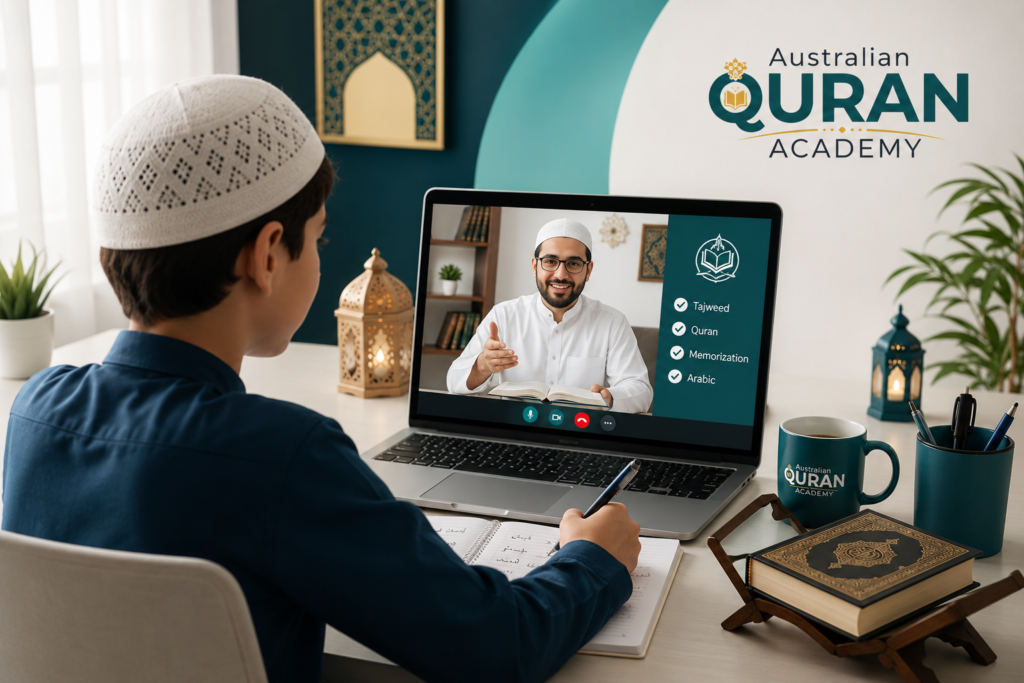
Start Your Quranic Journey in Australia
Join our leading online academy and learn with expert tutors through a structured, personalized curriculum.
Book Your Free TrialConclusion
What we learn from Quran is not a list to memorise but a way of living that touches every ordinary day.
It begins with a direct, personal bond with God, then works outward into how you speak, how you treat your parents, how you handle money, how you recover from mistakes, and how you refuse to give up on yourself.
The thread running through all twelve lessons is that belief and character are inseparable. Justice, kind speech, humility, and forgiveness are treated as acts of faith, not extras. And underneath them all sits the most reassuring lesson of the Quran: the door of mercy never closes for anyone still willing to walk through it.
These lessons are meant to be lived, not just read. Studying the verses closely — with their meaning and context — is what turns them from beautiful words into daily habits, and that is where structured learning makes the real difference.
Frequently Asked Questions
Below are quick answers to the questions people most often ask when they start exploring the lessons of the Quran and how to apply them.
1. What is the main thing we learn from Quran?
The main thing we learn from Quran is how to build a direct relationship with God and live with integrity. It combines correct belief with practical guidance on character, family, justice, and patience.
2. How can I apply lessons from the Quran in daily life?
Pick one lesson at a time, reflect on the verse behind it, and practise it consciously for a week. Small, consistent steps — like guarding your speech or giving regular charity — embed the lesson far better than trying to change everything at once.
3. Which Quran lesson helps most during hard times?
Patience and trust in God (Sabr and Tawakkul) help most in difficulty. The Quran treats patience as active strength — keeping your heart steady while you work through the problem, not simply enduring it silently.
4. Do I need to know Arabic to understand what we learn from Quran?
No. You can begin with translation and tafsir to grasp the meanings, then build reading skill over time. Starting from the basics of Arabic letters makes the verses accessible much faster than most beginners expect.
5. Can children learn these lessons easily?
Yes. Through simple stories, visuals, and short daily sessions, children absorb moral lessons like honesty, patience, and gratitude naturally — often more readily than adults.


Leave a Reply