 Quran
Quran

Key Takeaways
| Australian students can learn Quran effectively online through structured programs with qualified, experienced instructors. |
| Starting with Arabic letter recognition before recitation prevents ingrained pronunciation errors that are difficult to correct later. |
| Consistent daily practice of 20–30 minutes produces measurably faster progress than longer, irregular study sessions each week. |
| Tajweed must be learned with a qualified teacher — self-study apps cannot detect or correct mispronunciation in real time. |
| The Australian Quran Academy offers flexible online Quran classes timed to Australian schedules across NSW, VIC, QLD, and WA. |
Learning Quran in Australia is entirely achievable — and more structured than most beginners expect. Whether you are starting from zero, returning after years away, or guiding your child through their first lessons, the path forward is clear when you follow the right sequence.
The most effective approach combines a qualified instructor, a systematic curriculum, and consistent daily practice. Australian students who try to learn through apps or unstructured YouTube videos alone almost always plateau early — because pronunciation errors go uncorrected and foundational gaps quietly accumulate.
Step 1: Understand What Learning Quran Actually Requires
Learning Quran in Australia means acquiring three interconnected skills: Arabic letter recognition, correct recitation with Tajweed, and — for those pursuing memorisation — retention through structured review. Most beginners underestimate how distinct these three skills are and attempt to rush through the first to reach the second.
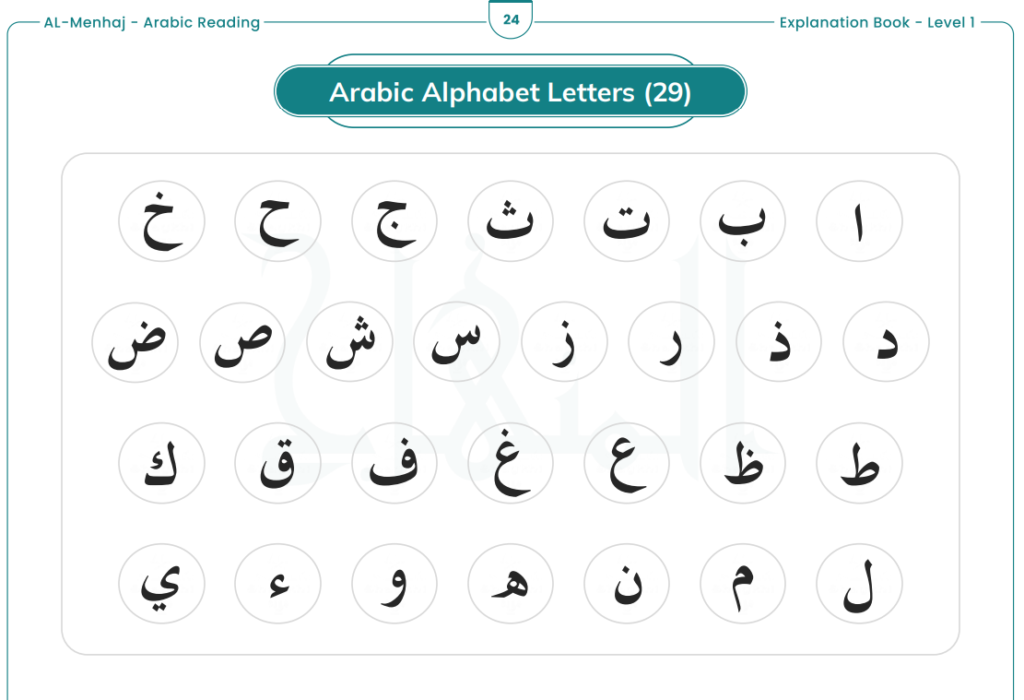
The foundation is always Arabic script. Without reliable letter recognition, recitation remains guesswork — students stare at a page and recall shapes rather than reading fluently.
Before attempting any Quran recitation, a new learner needs to identify all 28 Arabic letters in their isolated, initial, medial, and final forms.
This sequencing is not optional. Every qualified Quran instructor teaches letter recognition before recitation — and every student who skips this stage pays for it later with slow, uncertain reading that resists improvement.
Step 2: Choose the Right Learning Method for Your Situation
For Australian students, online Quran classes with a qualified instructor are the most effective and practical learning method available. In-person classes are limited to major cities and specific communities — online learning removes that geographic barrier entirely, without sacrificing instruction quality.
Three main options exist for Australian learners:
| Method | Pros | Limitations |
| Live 1-on-1 online classes | Real-time correction, personalised pace, accountability | Requires scheduling commitment |
| Group online classes | Lower cost, community feel | Less individual correction time |
| Self-study apps / YouTube | Flexible, free | No pronunciation feedback, no structured progression |
Self-study tools are useful supplements — not substitutes. An app can show you letter shapes. It cannot hear you mispronounce ح as a standard English “h” and correct it before the habit sets.
The Australian Quran Academy’s Online Quran Classes are structured specifically for Australian students — delivered live, one-on-one, with instructors who have worked with English-speaking learners across NSW, Victoria, Queensland, and Western Australia for years.
Book Your First FREE Quran Class in Australia
Step 3: Build Your Arabic Foundation Before Opening the Mushaf
Every student who arrives at their first Quran lesson having only used apps or informal YouTube instruction shares the same profile: their letter shapes are recognisable, but their pronunciation has no systematic foundation. The letters are visual memories, not phonetic ones.
Noorani Qaida is the most widely used foundational method for non-Arabic speakers learning to read Quran. It introduces Arabic letters progressively — isolated forms first, then combinations, then full words — with consistent attention to correct articulation from the first lesson.
The Qaida stage typically takes four to twelve weeks for adults, depending on prior exposure and practice consistency.
Rushing through it to “get to the Quran faster” is the single most common error adult learners make — and the one that creates the most frustration at intermediate level.
Shots Videos from Our Courses
Start Your Quranic Journey in Australia
Join our leading online academy and learn with expert tutors through a structured, personalized curriculum.
Book Your Free TrialStep 4: Begin Quran Recitation With Tajweed From the Start
Tajweed — the set of phonetic rules governing correct Quranic recitation — should be introduced from the very beginning of recitation, not treated as an advanced topic for later. Starting recitation without Tajweed awareness is like learning to type with two fingers: it works temporarily, but the habit is harder to break than it would have been to build correctly from the start.
The core Tajweed rules Australian beginners encounter first are:
- Noon sakinah and Tanwin rules — Idhar, Idgham, Ikhfa, and Iqlab
- Meem sakinah rules — Idgham Shafawi, Ikhfa Shafawi, Idhar Shafawi
- Qalqalah — the echo sound on the letters ق ط ب ج د
- Madd — the rules governing elongation of vowel sounds
Each of these rules is transmitted through authenticated chains (Isnad) from the Prophet ﷺ, as established in the classical Tajweed tradition — most systematically documented in Ibn al-Jazari’s Al-Jazariyyah.
The importance of correct recitation is directly established in hadith. The Prophet ﷺ said:
“The one who is proficient in the Quran will be with the noble, righteous scribes, and the one who recites the Quran and finds it difficult, then he will have two rewards.” (Sahih Muslim 798)
At The Australian Quran Academy, our Tajweed Course connects Australian students with qualified instructors who understand specifically how English phonology interferes with Arabic articulation — providing the direct, real-time correction that no app or self-study resource can replicate.
Start Reciting Quran with Tajweed with a Free Trial Session

Step 5: Establish a Consistent Daily Practice Routine
Consistency is more valuable than session length. Twenty minutes of focused daily practice produces faster, more durable progress than two-hour sessions twice a week. The brain consolidates new phonetic patterns during sleep — which means daily exposure is neurologically optimal for language and recitation learning.
A practical daily routine for Australian adults learning Quran looks like this:
| Time Block | Activity |
| 10 minutes | Revision of previously learned material |
| 10–15 minutes | New lesson content |
| 5 minutes | Listening to a qualified reciter read the same passage |
The listening component is consistently underused by Australian learners. Regularly hearing a qualified reciter — such as Sheikh Mahmoud Khalil Al-Husary in the Hafs ‘an ‘Asim transmission — trains the ear for correct articulation, Madd lengths, and Ghunnah (nasalisation) in ways that purely visual study cannot.
Step 6: Select a Structured Curriculum Matched to Your Level
Not every curriculum suits every learner. The correct starting point depends on current Arabic literacy, prior Quran exposure, age, and available study time. Beginning at the wrong level — too advanced or too basic — wastes months.
For absolute beginners (no Arabic background): Start with Noorani Qaida, then progress to beginner Quran recitation with foundational Tajweed.
For students with some prior exposure: A structured Quran Classes for Adults program that assesses current level and builds from a verified baseline — rather than assuming prior learning was systematic.
For children: Quran Classes for Kids with age-appropriate pacing, shorter sessions, and instructors trained to teach young learners online. Children typically respond to structured repetition and positive reinforcement differently than adults — a curriculum designed for adult learners does not transfer.
Enroll your Kid in our Quran classes for kids with a FREE session

For those pursuing memorisation: Quran Memorisation Program structured around daily new memorisation targets, consistent review cycles (Muraja’ah), and instructor accountability to prevent the accumulation of unverified memorisation.
Start your Hifz path with a FREE trial session

Step 7: Address the Specific Challenges Australian Students Face
Australian students face a distinct set of learning challenges that differ from students in Arabic-speaking countries — and a curriculum that ignores those challenges produces slower results.
The most consistent patterns among Australian learners include:
A. English phonology interference
Arabic contains sounds with no English equivalent — ع, غ, خ, ح, ق. Without targeted Makharij (articulation point) training, these letters default to the nearest English approximation. The substitution feels natural to the speaker and is completely invisible without a trained ear to catch it.
B. Isolation from Arabic-speaking community
Many Australian Muslims — particularly outside Sydney and Melbourne — have limited daily exposure to spoken Arabic. This reduces passive phonetic reinforcement and makes structured lesson time more critical, not less.
C. Irregular scheduling pressure
Work, school, and family commitments shape when Australian students can study. A rigid curriculum that demands fixed daily hours fails most adult learners. Flexible scheduling — matched to Australian time zones — is not a luxury feature; it is a structural requirement for real progress.
Every course at The Australian Quran Academy is delivered online, with session times matched to Australian time zones across NSW, Victoria, Queensland, and Western Australia — removing the geographic barrier that has historically made quality Islamic education difficult to access outside major cities.
Book a FREE Trial in any of our courses

Step 8: Track Your Progress and Advance Through Defined Levels
Progress without measurement is invisible — and invisible progress becomes discouragement. Every serious Quran learning program should include defined level progressions with assessable outcomes at each stage.
A structured progression for adult Quran learners looks like this:
| Level | Milestone |
| Foundation | All Arabic letters recognised and correctly pronounced in isolation |
| Beginner | Full fluent reading of short Surahs with foundational Tajweed applied |
| Intermediate | Consistent application of Noon sakinah, Meem sakinah, and Madd rules |
| Advanced | Independent recitation of full Juz with all major Tajweed rules active |
| Hifz-ready | Sufficient recitation accuracy to begin structured memorisation |
Tracking against these milestones achieves two things: it shows students how far they have come — which sustains motivation — and it shows instructors where gaps persist that require targeted attention.
Our Students Reviews
Start Your Quranic Journey in Australia
Join our leading online academy and learn with expert tutors through a structured, personalized curriculum.
Book Your Free TrialRead Also: How to Learn Quran for Kids in Australia?
Begin Your Quran Learning the Right Way With The Australian Quran Academy
Learning Quran with the right structure from the start saves years of correcting habits built on an unstable foundation.
The Australian Quran Academy offers:
- Structured programs for all levels — absolute beginners through to advanced recitation and Hifz
- Qualified instructors experienced with English-speaking Australian students
- Flexible online classes scheduled to Australian time zones — NSW, VIC, QLD, WA and beyond
- Personalised 1-on-1 lessons tailored to each student’s current level and pace
- Programs for children, teenagers, adults, women, and new Muslims
- Free trial lesson — no commitment required
Book your free trial lesson today and begin with the structured, qualified instruction that produces real, measurable progress.
Check out our top courses for Quran learning:
- Quran Classes for Adults
- Tajweed Classes
- Quran Classes for kids
- Hifz Classes
- Ijazah Program
- Noorani Qaida
- Tafsir Classes
Book your FREE trial session today.

Frequently Asked Questions About How to Learn Quran in Australia
Can You Learn Quran Effectively With Online Classes in Australia?
Yes — online Quran classes are highly effective for Australian students when delivered live with a qualified instructor. The critical factor is real-time correction: a live instructor can identify and address mispronunciation immediately. Pre-recorded video courses cannot. Australian students across every state have reached advanced recitation and memorisation levels through structured online instruction.
How Long Does It Take to Learn to Recite Quran From Scratch?
Most adults with no prior Arabic background reach confident, independent Quran recitation within 12 to 18 months of consistent study — typically two to three sessions per week with daily practice. Progress varies significantly based on regularity, practice quality, and whether foundational Tajweed is introduced from the beginning or added later.
Is It Necessary to Learn Arabic to Read the Quran?
You do not need conversational Arabic to recite the Quran — but you do need Arabic reading literacy. Quran recitation requires recognising Arabic letters, vowel marks (harakat), and recitation symbols accurately. This is a distinct and more achievable skill than full Arabic language fluency, and it is where every structured Quran program begins.
What Is the Best Age to Start Learning Quran?
Children typically begin structured Quran learning between ages five and seven — when letter recognition is developmentally accessible and phonetic habits are still forming. That said, there is no upper age limit. In our instructors’ experience, motivated adult beginners in their 40s and 50s consistently achieve strong recitation outcomes when they follow a structured curriculum with a qualified teacher.
Do I Need a Qualified Teacher, or Can I Learn Quran Alone?
A qualified teacher is essential for correct Tajweed. Self-study resources — apps, videos, and workbooks — can introduce letter shapes and basic concepts, but they cannot detect mispronunciation. Tajweed errors that go uncorrected in the early stages become deeply ingrained habits that require significant effort to unlearn. The investment in a qualified instructor early produces faster, more accurate progress overall.







Leave a Reply